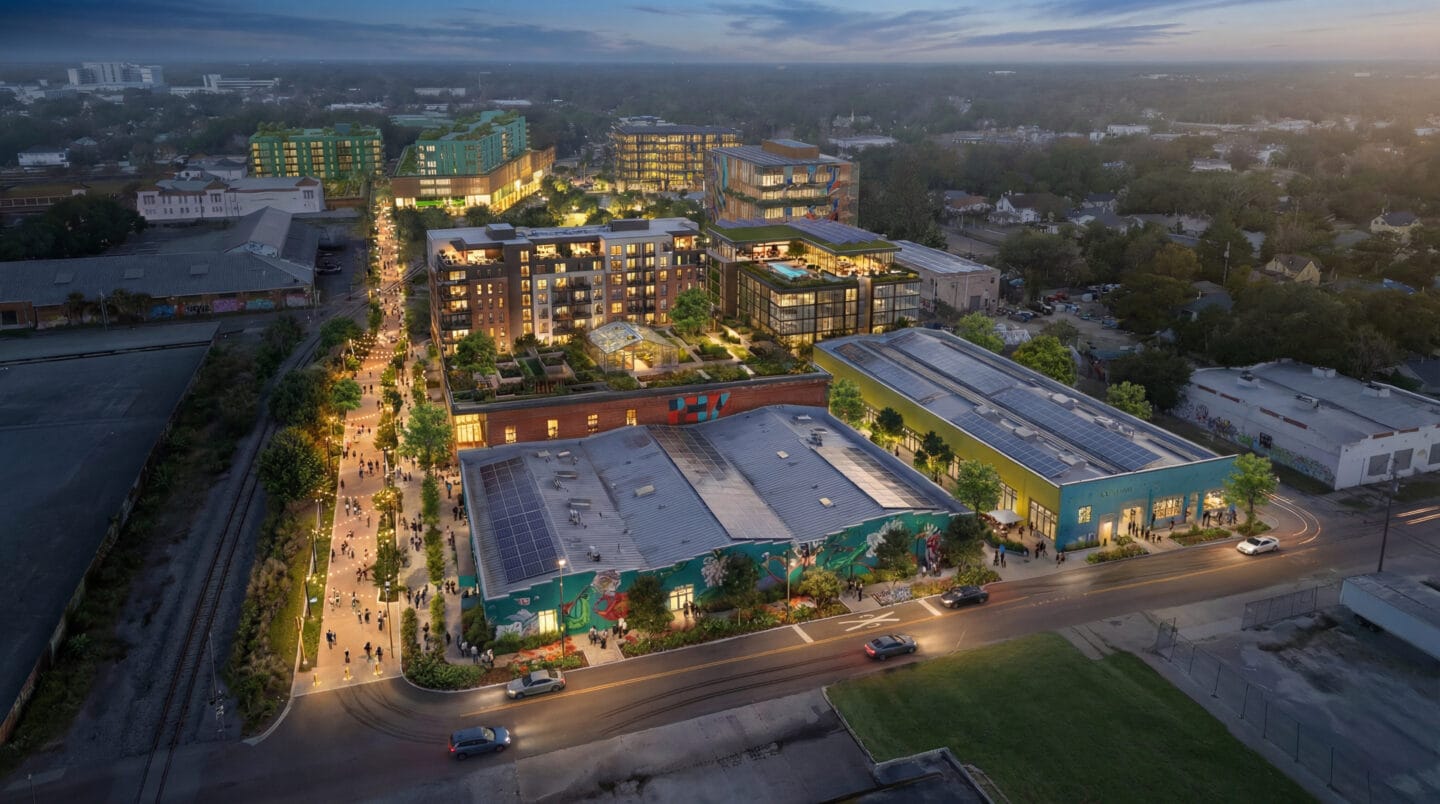
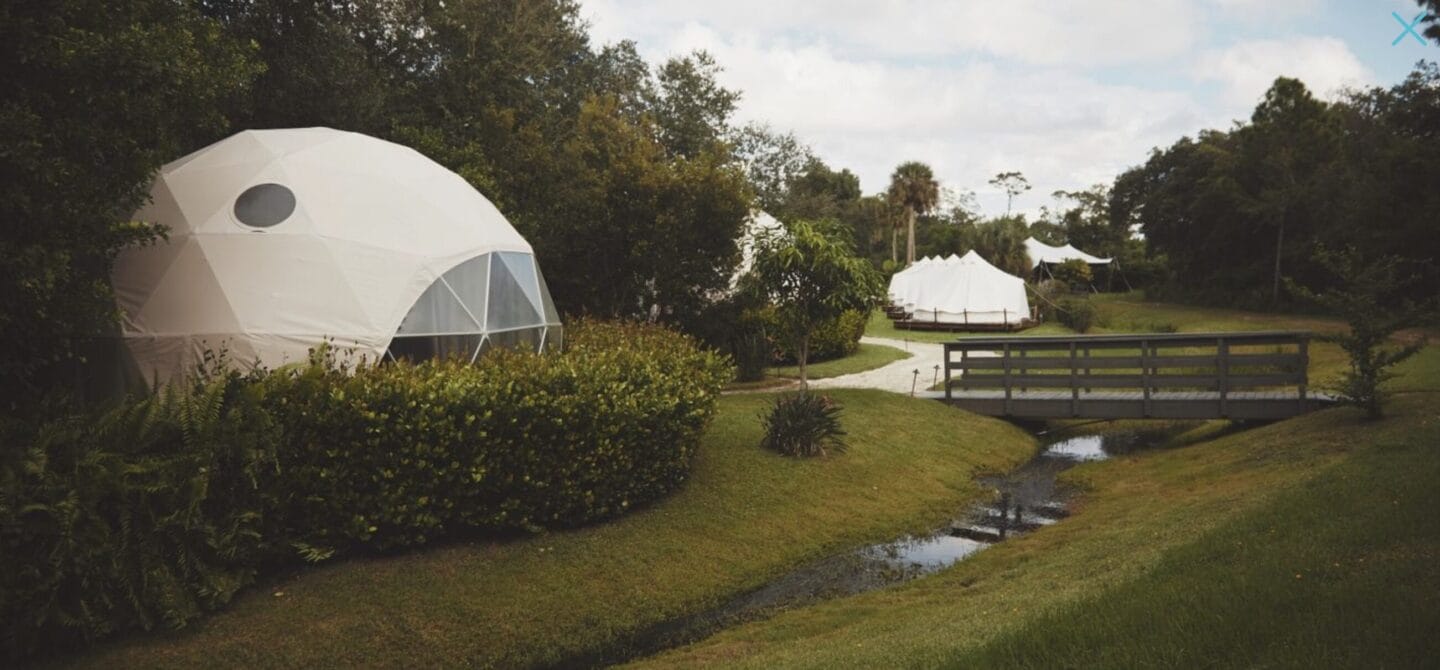
Conceptual exploration of the Phoenix Arts & Innovation District in Jacksonville, Florida by Future of Cities
The cities that will define the next century aren’t waiting to be built. They’re being reimagined right now — in underutilized corridors, in historic industrial bones, in the spaces between what a city was and what it could become. The Phoenix Arts & Innovation District is one of those places. And today, we’re announcing the partnership that moves it forward.
Future of Cities has partnered with Live Oak Contracting — a Jacksonville-based firm with a track record of delivering complex multifamily, mixed-use, and hospitality developments across the Southeast — to advance the next phase of PHXJAX. Live Oak Estates Group, their development arm, will work alongside the PHXJAX leadership team on planning and development strategy. Live Oak Contracting will provide pre-development and pre-construction services as the project builds toward execution.
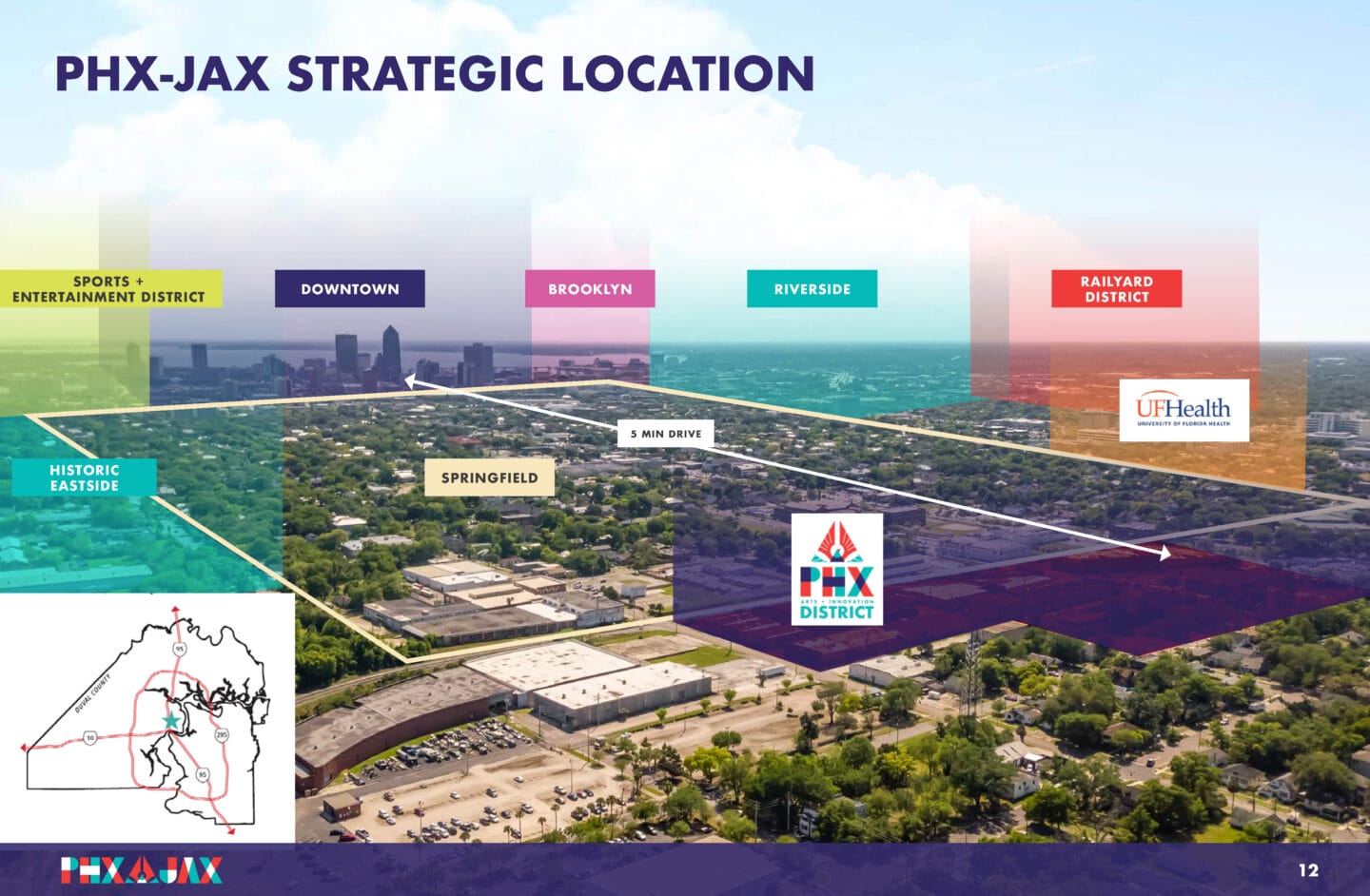
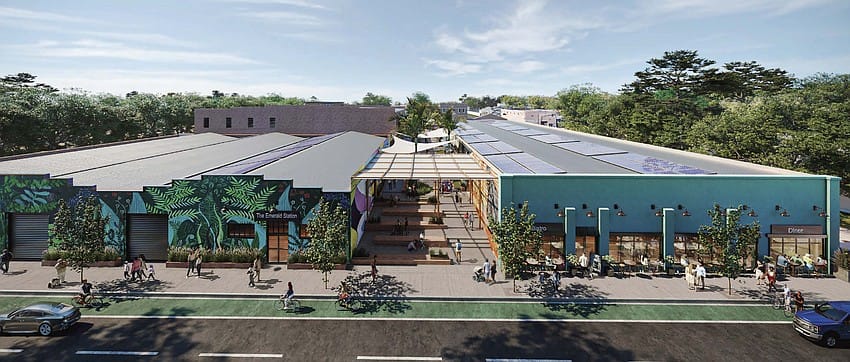
PHXJAX sits on 8.5 acres in Jacksonville’s historic Springfield neighborhood — just north of Downtown, anchored along the 30-mile Emerald Trail, and positioned at the center of a corridor ready for transformation. The vision is ambitious by design: 120,000 square feet of repurposed historic industrial buildings activated as creative workspace and community gathering space, embedded within a broader mixed-use district with entitlements for up to 830 multifamily units — affordable, workforce, and market-rate housing woven together in a walkable, transit-oriented neighborhood.
This is not a conventional development. It’s a district built around the premise that creativity, culture, and community are not amenities — they are infrastructure.
“This partnership reflects the strength of Jacksonville’s growth trajectory and the confidence we have in the Phoenix Arts & Innovation District as a catalytic project for the city,” said Tony Cho, Founder and CEO of Future of Cities.
Turning a vision at this scale into a built reality requires more than capital and a concept. It requires partners who understand the complexity of urban development — the site conditions, the construction sequencing, the community relationships — and who share the conviction that cities can be built differently.
Live Oak brings all of that. As a Jacksonville-rooted firm, they bring proximity, credibility, and construction expertise that the next phase demands.
“PHXJAX represents an opportunity to create a new kind of district for Jacksonville — one centered around creativity, community, and forward-looking development,” said Michael Weil, Chief Operating Officer of Future of Cities. “Partnering with a Jacksonville-based team like Live Oak brings both development insight and construction leadership as we move the vision forward.”
Paul Bertozzi, CEO of Live Oak Contracting and Live Oak Estates Group, sees the same horizon: “Projects like this have the potential to create lasting impact for a city by blending housing, culture, and innovation into a vibrant urban environment.”
The District Is Taking Shape
Planning is active. Additional milestones, development timelines, and programming announcements will follow as work progresses. What’s being built at PHXJAX — a district that integrates arts, innovation, housing, and civic life into something genuinely new — is worth watching closely.
Follow the story as it unfolds.
Visit phxjax.com for the latest on the Phoenix Arts & Innovation District, and stay connected with Future of Cities at focities.com.
The next chapter of Jacksonville is being written. We’re building it.
Building the Next Era of Regenerative, Community-Led Urban Transformation
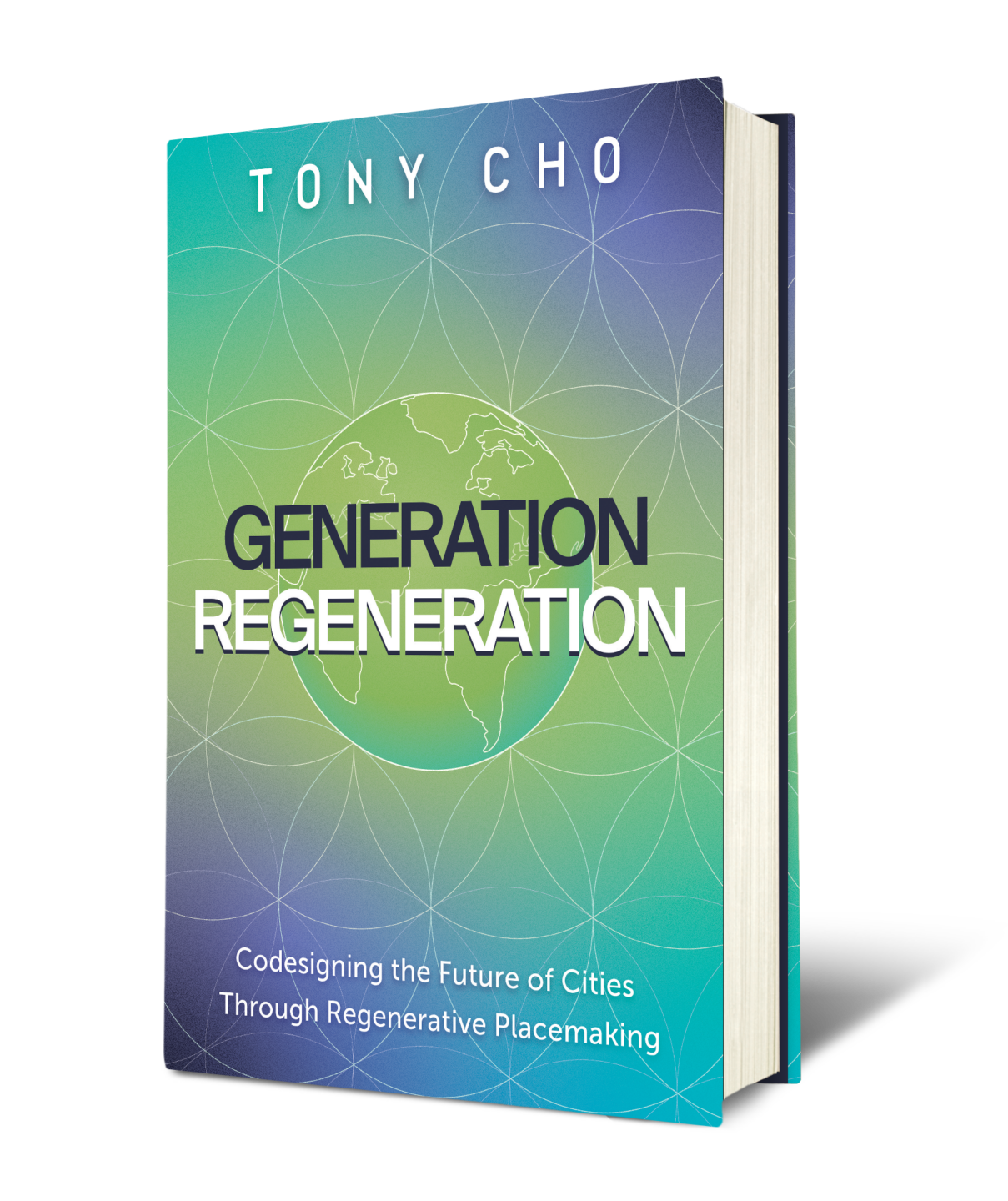
Cities don’t just shape skylines. They shape whether people feel connected, supported, and able to thrive together. Generation Regeneration: Co-Designing the Future of Cities Through Regenerative Placemaking by Future of Cities founder Tony Cho argues that the next era of city-making must start with a simple premise: community is not an “input” to development—it’s the outcome we design for.
The Loneliness Epidemic Is a Design Problem—and Real Estate Helped Create It
What we’re calling a “loneliness epidemic” is not merely cultural or personal—it’s structural. Decades of profit-driven, car-centric, single-use, isolating development have steadily weakened the social fabric. We are often physically closer, yet emotionally and civically disconnected: fewer “third places,” fewer casual interactions, less trust, and reduced neighborhood resilience.
This crisis isn’t accidental. It is the predictable result of systems optimized for throughput and return, not belonging and care. If the built environment can accelerate disconnection, it can also be co-designed to restore connection.
Regenerative Placemaking Is a Blueprint: Treat Cities Like Living Ecosystems
Future of Cities advances regenerative placemaking as the governing framework—moving beyond “sustainable” (doing less harm) to regenerative (actively healing). Regenerative placemaking is a systems approach that aligns three pillars as the core infrastructure of thriving places:
Community: shared power, local leadership, and durable relationships
Nature: nature-based design that restores and strengthens ecosystems
Culture: identity, meaning, and the creative life that builds belonging
When these pillars work together, neighborhoods can produce what conventional development often cannot: trust, vitality, and environments that nourish both people and planet.
Regeneration Is Wellness
Wellness isn’t a feature you add after a project is delivered. It is the direct outcome of whether a place regenerates life—socially, ecologically, and culturally.
When cities are designed for extraction and isolation, wellness declines, regardless of amenities. When cities are designed to restore ecosystems and strengthen belonging, wellness becomes the default.
A Book About Co-Designing What Comes Next
At the center of Generation Regeneration is co-design: engaging residents early, treating participation as real decision-making, and building with the cultural anchors—artists, educators, local institutions—who hold neighborhood continuity.
This is the shift Future of Cities is making visible: from development as transaction to placemaking as stewardship—guided by Community + Nature + Culture as the true wellness infrastructure of the future city.
A Youth Arts, Agriculture & Entrepreneurship Program in Jacksonville’s Phoenix Arts & Innovation District
JACKSONVILLE, FL — August 13, 2025
Friends of PHXJAX, the nonprofit arm of the Phoenix Arts & Innovation District, announced today the launch of Bloom Lab, a free after-school program for 6th–12th graders in Jacksonville’s North Springfield neighborhood. Thanks to $350,000 in funding from Governor Ron DeSantis, Senator Tracie Davis, Representative Wyman Duggan and the State of Florida, Bloom Lab will provide students with immersive educational experiences in arts, agriculture, and entrepreneurship, while creating pathways for personal growth, community engagement, and economic opportunity.
Bloom Lab will operate in 8-week learning cohorts where students rotate through hands-on workshops in gardening, creative arts, and business development. After completing their cohort, youth will collaborate to run a monthly, youth-led community market—selling produce they’ve grown, art they’ve created, and products they’ve designed. This market will serve as both a public event and a training ground for real-world business skills.
“North Florida After School Agriculture and Arts Programs is important to providing our youth with educational and creative opportunities that connect them with their community and environment,” said Senator Tracie Davis, who sponsored the funding bill.
“This area deserves investment that honors its history while providing pathways for growth. It was essential for the state to contribute to ensure this project’s success and sustainability. PHX JAX is a perfect example of how thoughtful investment can uplift a neighborhood and build a stronger future for all constituents.”
Emily Moody, Chief Experience Officer for the Phoenix Arts & Innovation District, said:
“Bloom Lab will give young people the chance to explore their creativity, gain practical skills, and see how they can make a difference in their community. We deeply appreciate Governor DeSantis, Senator Davis, and Representative Duggan for believing in this vision.”
Tony Cho, CEO of the Phoenix Arts & Innovation District, added:
“This investment allows us to cultivate the next generation of leaders right here in North Springfield. By combining arts, agriculture, and entrepreneurship, Bloom Lab is a perfect example of our regenerative placemaking approach, which give students the tools to thrive while contributing to the cultural and economic vitality of our city.”
Bloom Lab is scheduled to launch in late 2025 and run through June 2026. All programming will be hosted at the Phoenix Arts & Innovation District in North Springfield, leveraging its community gardens, art studios, and flexible event spaces.
About Friends of PHXJAX Friends of PHXJAX is a 501(c)(3) nonprofit dedicated to the regenerative development of the Phoenix Arts & Innovation District in Jacksonville’s North Springfield neighborhood. Through arts, culture, agriculture, and small business support, Friends of PHXJAX fosters community engagement, economic opportunity, and neighborhood revitalization.
Press Conference Details: Date: Wednesday, August 13, 2025 Time: 2:00 PM ET Location: Emerald Station, Phoenix Arts & Innovation District, 2320 N Liberty Street, Jacksonville, FL 32206 Speakers (in order of appearance): Emily Moody, Tony Cho, Senator Tracie Davis, Mayor Donna Deegan Photo Opportunity: Large check presentation following remarks
Media Contact: Emily Moody emoody@phxjax.org (904) 945.8686 www.phxjax.org
Friends of Phoenix, a 501(c)(3) nonprofit, was established to champion regenerative development to co-create a brighter future for Jacksonville while unlocking the full potential of the Phoenix Art & Innovation District .
A Vision for Community Transformation
The Phoenix Art & Innovation District exemplifies the potential of Public-Private Partnerships (PPPs) to transform neighborhoods. Friends of Phoenix is dedicated to advancing:
Business Opportunities: Providing platforms for local entrepreneurs to thrive.
Wellness Initiatives: Promoting physical and mental health for all community members.
Arts & Culture: Celebrating Jacksonville’s creativity and diversity through dynamic programming.
Business Incubation: Supporting startups and fostering innovation.
Sustainable Food Solutions: Building infrastructure for resilient, local food systems.
How You Can Help
We invite you to become a changemaker by making a tax-deductible donation. Your support contributes directly to:
Expanding wellness programs that enhance quality of life.
Building sustainable food systems that nourish the community.
Growing arts and culture initiatives that inspire connection and creativity.
Establishing a thriving community hub for innovation and resilience.
“QOZ 2.0 could rewrite the rules of engagement between capital and community—ushering in a new era of place-based investment grounded in accountability, transparency, and shared prosperity.”
“While the original intent of Opportunity Zones was to support both real estate development and the growth of operating businesses, the current regulatory environment often makes it difficult for startups and existing businesses to thrive. QOZ 2.0 should simplify rules for business qualification to ensure that we are truly fostering local entrepreneurship and economic growth within these communities.” — Jim Lang, Shareholder, Greenberg Traurig, LLP
These two events brought together some of the top minds in Qualified Opportunity Zones & Funds — family offices, developers, policymakers and community advocates to discuss what’s working—and what’s needed—for Opportunity Zones to fulfill their promise.
The goal? To connect capital with projects that are not only profitable, but regenerative—projects that elevate communities, foster resilience, and deliver long-term social value.
Miami OZ Summit 2025
Hosted by the City of Miami’s Department of Economic Innovation & Development, the Miami OZ Summit 2025 opened with remarks from Mayor Francis X. Suarez and U.S. Secretary of Housing & Urban Development highlighting the importance of Public-Private Partnerships, setting the tone for a day centered around community-driven development & economic innovation.
On Public-Private Partnerships
“…local electives have the flexibility to understand and to make the decisions on how they want to build these neighborhoods.”
– US Secretary of Housing & Urban Development (HUD) – Scott Turner
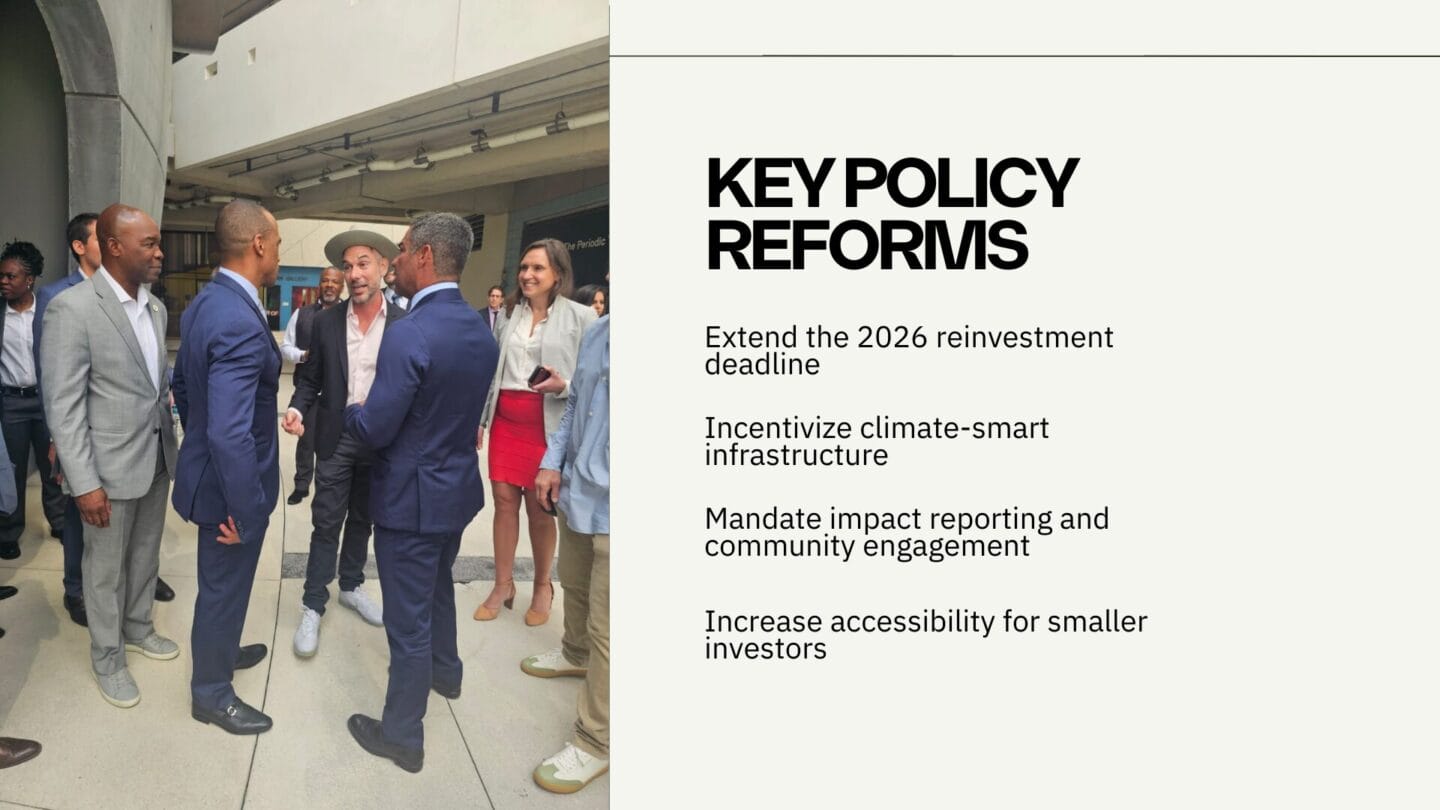
At both events, a clear sense of alignment & agreement emerged among industry leaders, policymakers, and investors: the future of Opportunity Zones must prioritize:
a long term extension to existing OZ zones with adjustments to the timelines and terms of the program
innovations in bank incentives to provide more financing into OZs
simplification of rules & restrictions for greater accessibility and flexibility to operate businesses in OZs
Across panels and presentations, there was strong consensus that these proposed policy updates would create more long-term value and an inclusive framework for investment. By centering local voices and mission-aligned capital, these changes have the potential to transform Opportunity Zones from a financial incentive into a powerful tool for regenerative development, unlocking long-term value in historically underserved neighborhoods.
“In terms of the way we zone our city, we also rely heavily on the private sector. We invite the private sector to the table as visionaries. We set the parameters, we set the rules, the limits but within those rules & limits we think that they have the best capability of visioning neighborhoods, of visioning developments & its worked really well. You were able to see and get a sense of how the city is growing and see how eclectic the neighborhoods are… it’s led to 140% growth from 2015-2024.”
– Mayor of Miami Francis X Suarez
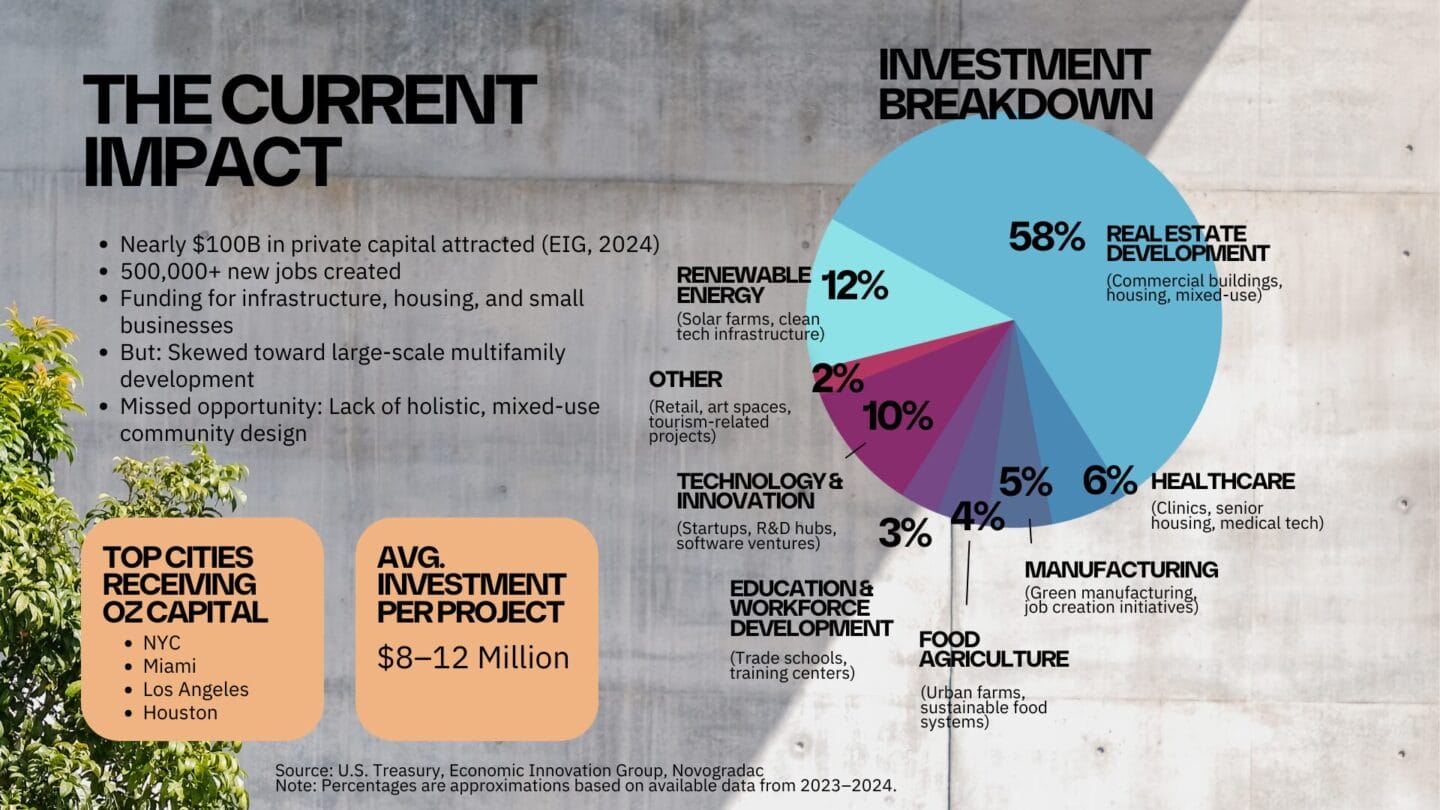
As legislation continues to evolve, so does the understanding of what Opportunity Zones can—and should—be. From climate-resilient infrastructure to culturally-rooted placemaking, this policy could expand far beyond the multifamily model that once defined it & these conversations are only the beginning.
At Future of Cities, with our continued commitment to SDG 11 Sustainable Cities & Communities, we remain committed to reimagining what opportunity truly looks like—on the ground, in policy, and in partnership with the communities we serve.
“We’ve been investing in Opportunity Zones since the very beginning—not just as developers, but as EcoSystems Thinkers. It’s not enough to build housing. We need to build ecosystems of innovation, equity, and healing.”
— Tony Cho, Founder & CEO, Future of Cities
Future of Cities’ flagship Opportunity Zone demonstration projects include:
Phoenix Art & Innovation District Strategic Location Map
The Phoenix Arts & Innovation District in Springfield, Jacksonville, which is activating local talent and culture to catalyze creative economies & small business incubation along with tackling access to affordable housing and healthy food in an urban food desert.
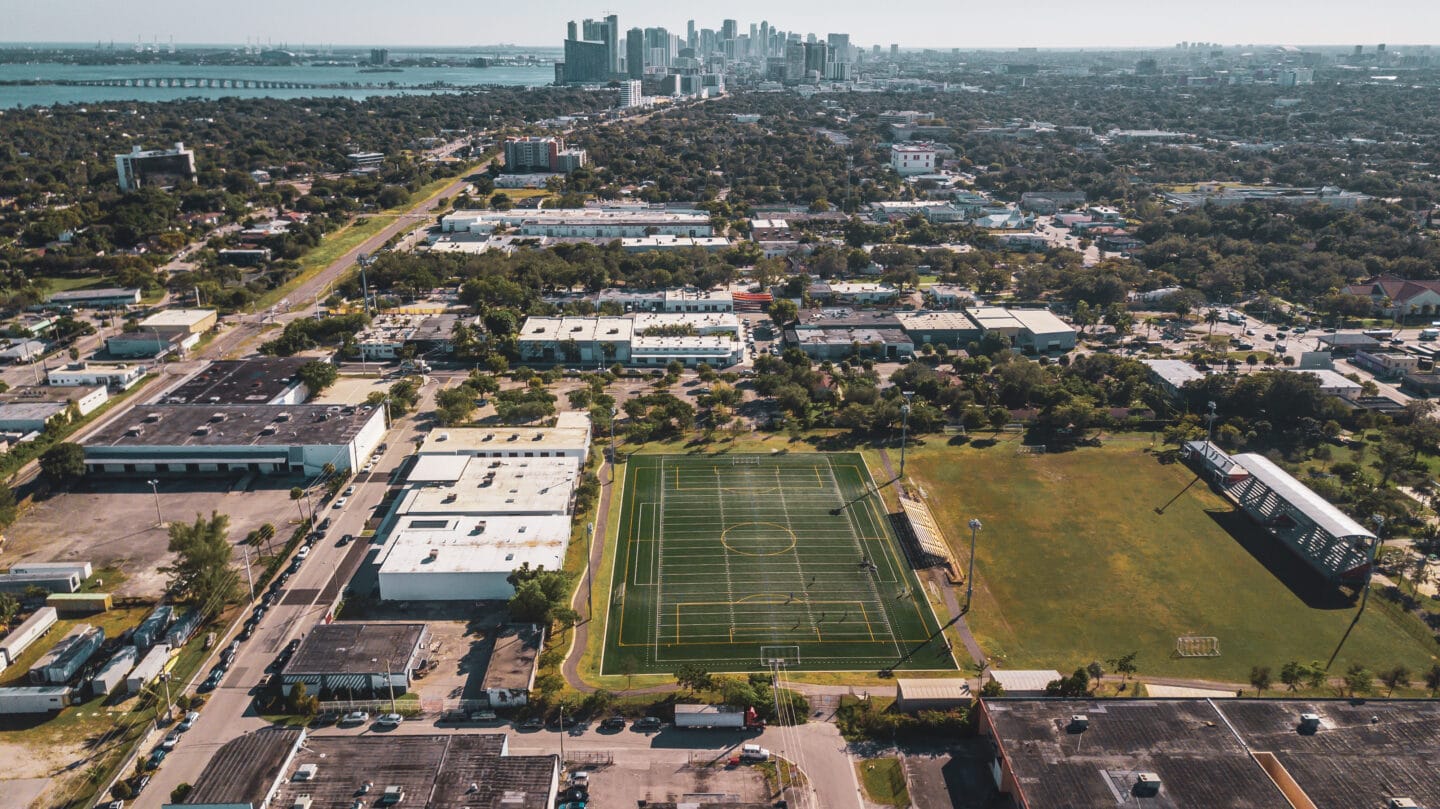
The Climate & Innovation HUB in Little Haiti, Miami, a regenerative placemaking campus designed to support circular economies, innovation, climate tech, and community collaboration.
“The magic of resilient & regenerative cities lies not just in buildings, but in the people who inhabit them. We have to move beyond transactional development to something transformational.”
— Tony Cho
Get Tony’s personal insights, policy breakdowns, and behind-the-scenes updates on regenerative living, purpose-driven leadership, and what it really takes to build the future of cities. Subscribe to the substack to receive upcoming insights & updates directly to your inbox.
As cities around the world reckon with climate challenges, biodiversity loss, and the social fragmentation caused by unchecked development, a new model for living is emerging—one that turns to nature not only for inspiration but for co-creation. Enter the “Bioregional Hub:” a place-based, integrated system of living that harmonizes human settlements with natural ecosystems. These hubs aren’t utopian dreams—they’re real-world prototypes reshaping how we live, build, govern, and grow. And they are poised to become the most vital infrastructure of our time.
What is a Bioregional hub?
Bioregional hubs are more than just eco-communities—they are living laboratories for regeneration, rooted in the ecological, cultural, and economic realities of their specific landscapes. Informed by regenerative design and Indigenous land stewardship, these hubs serve as blueprints for how humanity can thrive within the limits of nature—rather than in spite of them.
At their core, Bioregional Hubs integrate:
Sustainable Land Stewardship: Using regenerative agriculture, permaculture, and rewilding to restore ecosystems
Circular Economies: Fostering local production, closed-loop systems, and regenerative finance
Resilient Infrastructure: Building with renewable energy, water conservation, and nature-based design
Cultural Regeneration: Celebrating Indigenous wisdom, community resilience, and intergenerational knowledge
Wellness and Education: Cultivating immersive spaces for ecological literacy and holistic well-being
These principles serve as the scaffolding for a new era of climate-adaptive, community-centered development.
From Movement to Model: The Origins of Bioregionalism
Bioregionalism emerged in the 1970s in response to the alienation of people from their environments. It asked a simple but revolutionary question: What if we lived in a way that truly honored the land we’re on?
The answers became more sophisticated over time. Today’s bioregional hubs are a synthesis of decades of environmental wisdom, design thinking, and community practice. They are shaped by movements like permaculture, Indigenous sovereignty, and regenerative urbanism.
And now, they’re shaping the future of cities.
“I believe the future of regenerative living lies in bioregional hubs—where communities are rooted in local ecology, regenerative principles drive economies, and collaboration sparks innovation. Bioregional hubs reconnect communities with their local environments, offering place-based solutions to our most pressing global challenges.” – Tony Cho, Founder & CEO, Future of Cities
Why Bioregional Hubs Matter Now
As the climate crisis escalates and social trust erodes, we need solutions that are:
Localized: Tailored to the unique climate, culture, and challenges of a place
Resilient: Able to withstand ecological shocks and economic disruption
Inclusive: Designed by and for communities, not imposed on them
Scalable: Capable of being adapted across urban, peri-urban, and rural settings
This is not just environmentalism—it’s regenerative placemaking. It’s where real estate, resilience, and reverence for nature converge.
ChoZen: A Living Example in Florida
This vision comes alive at ChoZen Eco-Retreat, co-founded by Tony and Ximena Cho along Florida’s San Sebastian River. Situated within a richly biodiverse watershed and in collaboration with organizations like Wildpath, Path of the Panther, and the Florida Wildlife Corridor, ChoZen operates as a bioregional hub in action.
At ChoZen, every decision—from water management to community programming—is rooted in local ecology. The land is not a backdrop, but a collaborator. With offerings like eco-tours, wellness immersions, and regenerative development workshops, ChoZen is catalyzing a cultural shift—one that moves us from extraction to co-creation.
The heartbeat of this hub is the ChoZen Center for Regenerative Living (CCRL)—a nonprofit dedicated to conservation demonstration and community empowerment. CCRL connects changemakers, land stewards, artists, and youth in active regeneration, from habitat restoration to circular economic pilots.
It’s not about building back better. It’s about building forward—in harmony with nature, not in opposition to it.
Bioregional hubs like ChoZen are not outliers—they are prototypes for the next generation of human settlements. As cities continue to grow, we must ask ourselves: How do we grow with integrity, with care, and with creativity?
“The future of cities will be shaped by those who remember how to live in deep relationship with place.” – Tony Cho
It’s time to shift from monocultures to biodiverse neighborhoods. From concrete jungles to living ecologies. From top-down design to grassroots co-creation.
“Imagine a future where every development project replenishes the soil, purifies the water, cleans the air and revitalizes the community.”
Tony Cho, Founder of Future of Cities
What if our cities could heal the earth instead of harm it? What if the neighborhoods we build not only supported economic growth, but also nurtured culture, restored ecosystems, and strengthened human connection? This is the transformative nature of EcoSystems Thinking—a regenerative mindset that places nature, community, and culture at the heart of how we design and develop places.
At Future of Cities, this is more than a vision—it’s the lens through which we view our projects and helps to guide every decision we make.
A Living Framework: What Is EcoSystems Thinking?
At its core, EcoSystems Thinking is a recognition that we are not separate from nature, but deeply embedded within it. It invites us to see cities not just as collections of buildings and infrastructure, but as dynamic ecosystems—where the health of one part directly affects the whole.
As Future of Cities founder, Tony Cho explains:
“EcoSystems Thinking allows for the most efficient and well-informed decision-making capacity based on both highly evolved natural systems as well as human systems. If we can optimize for both, then we can achieve great things together.”
This mindset urges us to:
Reconsider where we build and with what materials—informed by nature.
Reflect on who we build with—rooted in community.
Redefine how we create value—guided by culture.
It’s a radical departure from extractive, linear models toward circular, reciprocal practices that regenerate life.
Nature as Teacher: The Blue + Greenprints
EcoSystems Thinking begins by honoring the intelligence of the natural world. In nature, there is no waste. Every organism, every cycle, every system plays a role in nourishing the whole. Through biomimicry, permaculture, indigenous knowledge, and regenerative design, we can begin to reimagine how urban development supports—not suppresses—these patterns.
“In natural ecosystems, nothing is wasted; every element serves a purpose, supporting the health and resilience of the whole.”
Tony Cho
Our Blue + Greenprints draw from this wisdom, aligning development with natural systems to create clean, safe, and resilient places where people and the planet thrive together.
EcoSystems Thinking comes to life through our Regenerative Placemaking framework—three interconnected pillars that ensure lasting impact.
1. Nature: Responsible Land & Ocean Stewardship
To design with nature is to respect the ecology of place. At Future of Cities, we partner with visionaries like Regenesis Institute, PlacemakingX, and The ReefLine to promote place-based solutions grounded in resilience, conservation, and restoration.
From integrating green infrastructure to sourcing sustainable materials, we prioritize the long-term vitality of the land and water.
2. Community: The People
Communities are ecosystems too. They flourish when relationships are nurtured and resources are shared. At the Phoenix Arts & Innovation District (PHXJAX), we’re cultivating a creative economy where artists, technologists, and residents collaborate to solve real challenges—like food access, affordable housing, and social justice—while celebrating the local heritage.
“By nurturing relationships through collaboration, resource-sharing, and care for nature, we create resilience and mutual benefit.” – Tony Cho
3. Culture: Currency & Circular Economies
Culture is more than art—it’s a regenerative force. When economic models reflect cultural values like stewardship, equity, and collaboration, prosperity becomes circular and inclusive.
At the Climate & Innovation HUB in Miami, we’re embedding circular business models into the DNA of entrepreneurship. Through zero-waste events, regenerative workshops, and a thriving network of innovators, the HUB embodies how culture and commerce can evolve together.
The Power of Cross-Pollination
To regenerate entire cities, we must think like ecosystems: diverse, interconnected, and mutually supportive. That’s why Future of Cities embraces Public-Private Partnerships (PPPs) and Collective Impact Models to bring together government, industry, artists, activists, investors, and community members.
“No single entity or individual can achieve this alone… Collaboration across sectors, disciplines, and geographies is key.” – Tony Cho
Cross-pollination accelerates innovation, drives systems change, and ensures our solutions are inclusive and scalable.
Becoming an EcoSystems Thinker
EcoSystems Thinking isn’t just a framework—it’s a movement. It’s a call to rethink our place in the world, and to design in harmony with it.
Here’s how you can begin:
Adopt a holistic mindset: See the interconnection between the natural, human, and built environments. Shift from linear systems to circular ones that replenish.
Center collaboration: Build bridges across communities, sectors, and disciplines. Shared solutions amplify collective impact.
Integrate culture with economy: Let storytelling, shared values, and cultural wisdom shape sustainable markets and regenerative growth.
“It’s my belief that by co-creating a world where urban and natural systems thrive in harmony, we can leave a legacy.” – Tony Cho
The Future Is Regenerative
The future isn’t something we wait for—it’s something we build. As cities continue to grow and adapt, the question is not if we should change how we develop, but how quickly we can shift toward regeneration.
EcoSystems Thinking offers the tools. We must provide the will.
As our cities and towns expand to accommodate growing populations, the balance between urban development and ecological preservation becomes increasingly fragile. One critical strategy to address this challenge is the creation and maintenance of green corridors. These continuous stretches of vegetation, connecting parks, forests, wetlands, and other natural habitats, are essential for promoting biodiversity, improving quality of life, and enhancing climate resilience.
What Are Green Corridors?
Green corridors are linear green spaces that link larger natural areas, enabling wildlife to move freely and safely across fragmented landscapes. They can take many forms: riverbanks, urban greenways, tree-lined streets, or even vegetated rooftops that connect natural habitats within cities. By integrating nature into urban and suburban environments, green corridors create pathways for ecological connectivity.
One example of green infrastructure supporting wildlife is the green bridge in Nettersheim, Rhineland-Palatinate, Germany, which allows animals to safely cross the Autobahn A1, reducing road fatalities and maintaining genetic flow between populations.
A green bridge allows animals to cross the Autobahn A1 safely – Eifel region, Rhineland-Palatinate, Germany
Ecological Benefits
One of the primary functions of green corridors is to support biodiversity. Habitat fragmentation—caused by roads, buildings, and other infrastructure—is a leading cause of species decline. Green corridors mitigate this by providing:
Safe Passage: Animals can migrate, forage, and breed without the threats posed by traffic or human interference.
Gene Flow: Corridors facilitate genetic exchange between wildlife populations, which is crucial for maintaining healthy ecosystems.
Pollinator Support: Bees, butterflies, and other pollinators thrive in these connected green spaces, ensuring the health of both natural and agricultural systems.
Organizations like Wildpath, The Nature Conservancy, and Wildlife Corridors Australia are actively working to establish and protect green corridors that sustain biodiversity and ensure safe wildlife movement.
Climate Resilience
In the face of climate change, green corridors are vital for creating resilient communities. They contribute by:
Reducing Urban Heat: Vegetation in green corridors lowers surface and air temperatures, combating the urban heat island effect.
Carbon Sequestration: Trees and plants absorb carbon dioxide, helping to offset emissions.
Flood Mitigation: Green corridors often include permeable surfaces and water features that absorb excess rainwater, reducing the risk of urban flooding.
An example of this is the Recreio Green Corridor Project in Brazil, launched in 2012 by the Municipal Secretariat for the Environment. This project aims to protect and enhance the biodiversity of the region while helping the west side of the city adapt to coastal flooding and erosion.
Nonprofits such as Rainforest Trust and Green Corridors (South Africa) are also focusing on reforestation and ecosystem restoration to enhance climate resilience worldwide.
Social and Economic Benefits
Beyond ecological advantages, green corridors offer significant social and economic benefits:
Improved Health: Access to green spaces encourages physical activity, reduces stress, and improves mental well-being.
Enhanced Aesthetics: Tree-lined streets and landscaped pathways increase property values and attract tourism.
Community Connectivity: Green corridors double as pedestrian and cycling routes, fostering active transportation and community interaction.
Mexico City showcases both older and newer green corridor infrastructure, with shaded walking and cycling routes in the Roma and Condesa districts, and the innovative Ecoductor – Walking River, integrating walking into green and blue corridors while connecting with the city-wide cycle hire scheme.
Organizations like Urban Green Spaces (UK) and Green Infrastructure Partnership advocate for green corridors as tools for enhancing urban livability and well-being.
Challenges and Solutions
The implementation of green corridors often faces challenges such as land acquisition, funding, and competing urban priorities. However, these hurdles can be addressed with innovative approaches:
Public-Private Partnerships: Collaboration between governments, developers, and non-profits can pool resources for green corridor projects.
Integrated Planning: Including green corridors in urban master plans ensures they are prioritized alongside infrastructure development.
Community Involvement: Engaging local communities in the planning and maintenance of green corridors fosters stewardship and ensures the spaces meet public needs.
Inspiring Examples
Globally, there are inspiring examples of green corridors transforming urban areas:
Piggyback Yard Feasibility Study, Los Angeles: This project examines converting a 125-acre rail yard into a new terrain supporting riparian habitat and providing public access while maintaining hydraulic performance during peak flows within the central corridor of Los Angeles. Outlining the development and hydrological programs that will transform Piggyback Yard from a concrete industrial landscape to a “River Destination,” this ambitious vision serves as a catalyst for urban regeneration along the LA River corridor. Despite these ambitious plans, the primary obstacle remains Union Pacific’s steadfast position on retaining the property for its rail operations. This stance has made it challenging to advance redevelopment proposals. While the Los Angeles River Master Plan, released in 2022, outlines a comprehensive framework for revitalizing the river and its adjacent areas, significant progress on the Piggyback Yard transformation has been limited due to the property’s continued use as a rail yard.
Wildpath & The Florida Wildlife Corridor: Wildpath has played a pivotal role in the conservation of millions of acres within The Florida Wildlife Corridor. Their work in raising awareness and advocating for land protection has led to significant legislative action, ensuring the long-term preservation of critical habitats. Their Emmy-winning documentary, Path of the Panther, has brought national attention to the urgent need for conservation efforts.
Bogotá, Colombia: Eastern Hills Ecological and Recreational Corridor: This ambitious project, led by environmental planner Diana Wiesner, integrates natural ecosystems with recreational spaces to promote sustainability and urban resilience.
London Green Spaces: The Map of London Green Spaces, produced by Greenspace Information for Greater London (GiGL), highlights the city’s extensive green infrastructure, demonstrating a successful model for urban green corridor integration.
Policy & Place
Aligning policy with green corridors for placemaking requires a multi-layered approach that integrates land-use planning, environmental protection, community engagement, and sustainable development. Here’s how policymakers can support green corridor initiatives:
1. Incorporate Green Corridors into Urban and Regional Plans
Mandate the inclusion of green infrastructure in zoning laws and urban development plans.
Require ecological impact assessments for new developments to protect and integrate existing corridors.
Promote mixed-use developments that incorporate green spaces and connectivity.
2. Strengthen Environmental Protections
Establish protected status for green corridors through conservation easements or municipal land designations.
Enforce buffer zones around critical habitats to prevent encroachment from urban expansion.
Implement wildlife-friendly infrastructure regulations, such as green bridges and underpasses.
Offer tax credits or development incentives for projects that enhance green corridors.
Create green bonds or funding mechanisms to support conservation and restoration efforts.
Encourage real estate developers to integrate nature-based solutions in exchange for zoning benefits.
4. Enhance Mobility & Accessibility
Align transportation policies with pedestrian and cycling networks to reduce car dependency.
Invest in multi-modal transit systems that complement green corridors (e.g., The Underline in Miami).
Implement greenway standards in infrastructure projects to ensure public access and safety.
5. Foster Community Stewardship & Engagement
Support community-led conservation initiatives through grants and participatory planning.
Create educational programs to increase awareness of green corridor benefits.
Encourage local businesses to sponsor green corridor maintenance and public programming.
6. Integrate Climate Resilience Policies
Align green corridors with stormwater management and flood mitigation strategies.
Use native plant policies to support biodiversity and reduce maintenance costs.
Implement carbon sequestration goals through afforestation and rewilding projects.
Go Green
Green corridors are not just environmental features; they are lifelines for ecosystems and urban communities alike. By investing in these natural pathways and supporting organizations dedicated to their preservation, we can create cities that are not only sustainable but also more livable and connected. As we envision the future of urban and regional planning, green corridors should be at the heart of our efforts to harmonize development with nature.