
January 12, 2026
#RegenerativePlacemaking
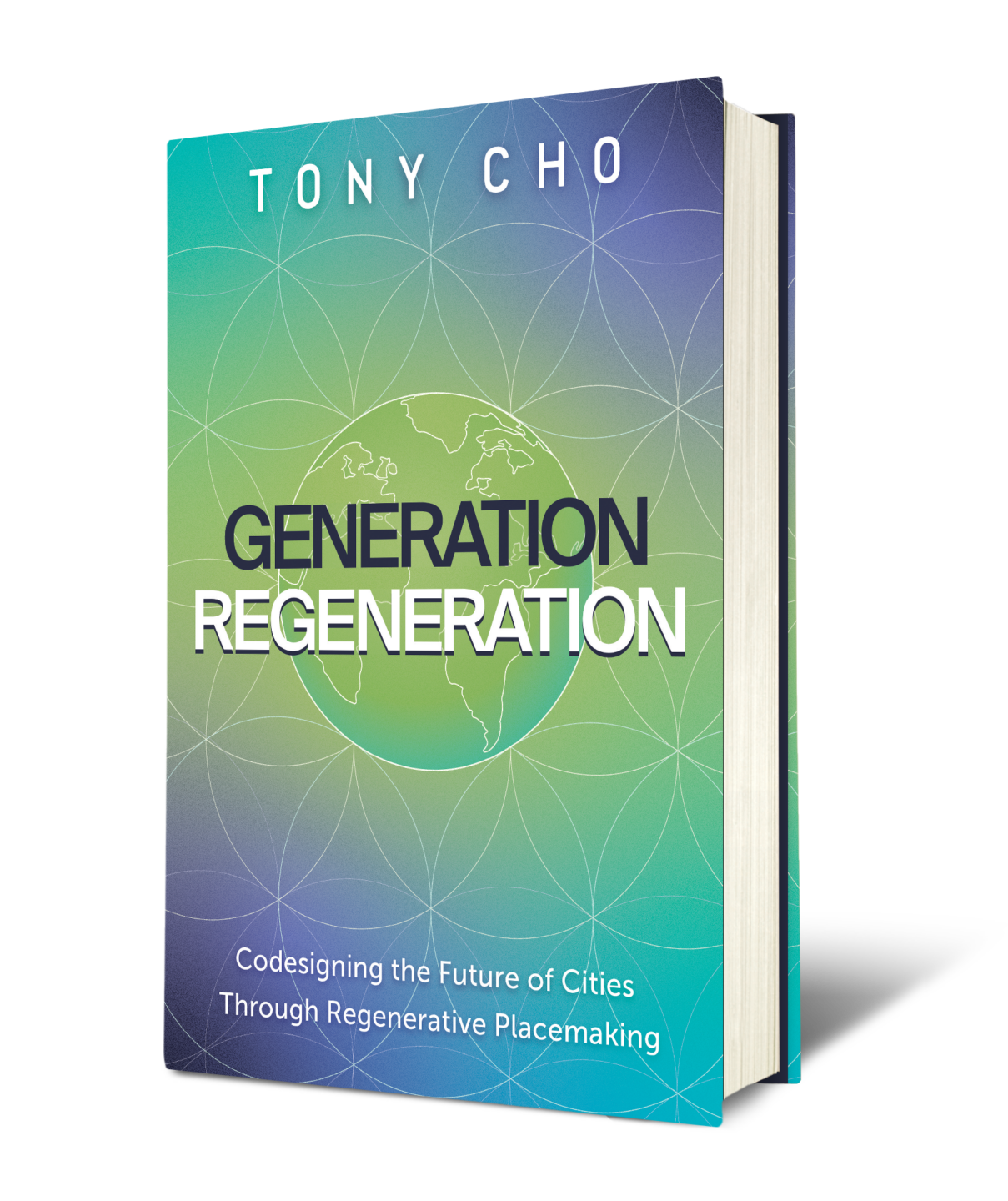
Generation Regeneration: Codesigning the Future of Cities Through Regenerative Placemaking
Building the Next Era of Regenerative, Community-Led Urban Transformation
Cities don’t just shape skylines. They shape whether people feel connected, supported, and able to thrive together. Generation Regeneration: Co-Designing the Future of Cities Through Regenerative Placemaking by Future of Cities founder Tony Cho argues that the next era of city-making must start with a simple premise: community is not an “input” to development—it’s the outcome we design for.
The Loneliness Epidemic Is a Design Problem—and Real Estate Helped Create It
What we’re calling a “loneliness epidemic” is not merely cultural or personal—it’s structural. Decades of profit-driven, car-centric, single-use, isolating development have steadily weakened the social fabric. We are often physically closer, yet emotionally and civically disconnected: fewer “third places,” fewer casual interactions, less trust, and reduced neighborhood resilience.
This crisis isn’t accidental. It is the predictable result of systems optimized for throughput and return, not belonging and care. If the built environment can accelerate disconnection, it can also be co-designed to restore connection.
Regenerative Placemaking Is a Blueprint: Treat Cities Like Living Ecosystems
Future of Cities advances regenerative placemaking as the governing framework—moving beyond “sustainable” (doing less harm) to regenerative (actively healing). Regenerative placemaking is a systems approach that aligns three pillars as the core infrastructure of thriving places:
- Community: shared power, local leadership, and durable relationships
- Nature: nature-based design that restores and strengthens ecosystems
- Culture: identity, meaning, and the creative life that builds belonging
When these pillars work together, neighborhoods can produce what conventional development often cannot: trust, vitality, and environments that nourish both people and planet.
Regeneration Is Wellness
Wellness isn’t a feature you add after a project is delivered. It is the direct outcome of whether a place regenerates life—socially, ecologically, and culturally.
When cities are designed for extraction and isolation, wellness declines, regardless of amenities. When cities are designed to restore ecosystems and strengthen belonging, wellness becomes the default.
A Book About Co-Designing What Comes Next
At the center of Generation Regeneration is co-design: engaging residents early, treating participation as real decision-making, and building with the cultural anchors—artists, educators, local institutions—who hold neighborhood continuity.
This is the shift Future of Cities is making visible: from development as transaction to placemaking as stewardship—guided by Community + Nature + Culture as the true wellness infrastructure of the future city.